Uncategorized

Yes, it’s TUESDAY. Don’t forget it.

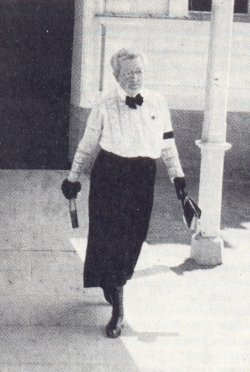
Today is the anniversary of the Battle of Los Angeles in 1942. The Battle of Los Angeles, also known as the Great Los Angeles Air Raid, is the name given by contemporary sources to a rumored attack on the continental United States by Imperial Japan and the subsequent anti-aircraft artillery barrage which took place from late February 24, to early February 25, 1942, over Los Angeles, California.

In the months following Japan’s attack on Pearl Harbor in Hawaii on December 7, 1941, public outrage and paranoia intensified across the country and especially on the West Coast, where fears of a Japanese attack on or invasion of the U.S. continent were acknowledged as realistic possibilities. In Juneau, Alaska, residents were told to cover their windows for a nightly blackout after rumors spread that Japanese submarines were lurking along the southeast Alaskan coast. Rumors that a Japanese aircraft carrier was cruising off the coast of the San Francisco Bay Area resulted in the city of Oakland closing its schools and issuing a blackout; civil defense sirens mounted on patrol cars from the Oakland Police Department blared through the city, and radio silence was ordered. The city of Seattle also imposed a blackout of all buildings and vehicles, and owners who left the lights on in their buildings had their businesses smashed by a mob of 2,000 residents. The rumors were taken so seriously that 500 United States Army troops moved into the Walt Disney Studios lot to defend the famed Hollywood facility and nearby factories against enemy sabotage or air attacks.

As the U.S. began mobilizing for the war, anti-aircraft guns were installed, bunkers built, and air raid precautions drilled into the populace all over the country. Contributing to the paranoia was the fact that many American merchant ships were indeed attacked by Japanese submarines in waters off the West Coast, especially from the last half of December 1941 through February 1942. As the hysteria continued to mount, on 23 February 1942, at 7:15 pm, during one of President Franklin D. Roosevelt’s fireside chats, Japanese submarine I-17 surfaced near Santa Barbara, California, and shelled Ellwood Oil field in Goleta.

On 24 February 1942, the Office of Naval Intelligence issued a warning that an attack on mainland California could be expected within the next ten hours. That evening, many flares and blinking lights were reported from the vicinity of defense plants. An alert was called at 7:18 pm, and was lifted at 10:23 pm. Renewed activity began early in the morning of 25 February. Air raid sirens sounded at 2:25 am throughout Los Angeles County.[13] A total blackout was ordered and thousands of air raid wardens were summoned to their positions. At 3:16 am, the 37th Coast Artillery Brigade began firing .50-caliber machine guns and 12.8-pound (5.8 kg) anti-aircraft shells into the air at reported aircraft; over 1,400 shells were eventually fired. Pilots of the 4th Interceptor Command were alerted but their aircraft remained grounded. The artillery fire continued sporadically until 4:14 am. The “all clear” was sounded and the blackout order was lifted at 7:21 am.

Several buildings and vehicles were damaged by shell fragments, and five civilians died as an indirect result of the anti-aircraft fire: three were killed in car crashes in the ensuing chaos and two of heart attacks attributed to the stress of the hour-long action. The incident was front-page news along the West Coast and across the nation.

After the war ended in 1945, the Japanese government declared that they had flown no airplanes over Los Angeles during the war. In 1983, the U.S. Office of Air Force History concluded that an analysis of the evidence points to meteorological balloons as the cause of the initial alarm.

More details

Page B of the February 26, 1942, Los Angeles Times, showing the coverage of the so-called Battle of Los Angeles


How he will return…

When cornered, the Pope can spray holy water up to 25 feet. Don’t ignore the warning signs…

keep hoping…

blame catnip…

According to the Secretary of HHS…

Today is the birthday, in 1950, of George Thorogood, American musician, singer and songwriter. His high-energy boogie-blues sound became a staple of 1980s rock radio, with hits like his original songs ‘Bad to the Bone’ and ‘I Drink Alone’. https://www.youtube.com/watch?v=IyhJ69mD7xI

Posted by Tom

FRIDAY…about time!

Today is the anniversary of the Supreme Court Decision in 1905 that upheld the right of states to impose compulsory vaccinations. The decision, Jacobson v. Massachusetts articulated the view that individual liberty is not absolute and is subject to the police power of the state. Jacobson has been invoked in numerous other Supreme Court cases as an example of a baseline exercise of the police power.

Massachusetts was one of 11 states that had compulsory vaccination laws. Massachusetts law empowered the board of health of individual cities and towns to enforce mandatory, free vaccinations for adults over the age of 21 if the municipality determined it was necessary for the public health or safety of the community. Adults who refused were subject to a $5 fine (about $186 in 2025 dollars).

Cambridge pastor Henning Jacobson had lived through an era of mandatory vaccinations back in his original home of Sweden. Jacobson refused vaccination saying that “he and his son had had bad reactions to earlier vaccinations”. Because of his refusal to get vaccinated, Jacobson was prosecuted and fined $5. Over the next three years until his case reached the Supreme Court of the United States, Jacobson argued that subjecting him to a fine or imprisonment for neglecting or refusing vaccination was an invasion of his liberty, the law was “unreasonable, arbitrary and oppressive”, and that one should not be subjected to the law if he or she objects to vaccination, no matter the reason.

Justice John Marshall Harlan delivered the decision for a 7–2 majority that the Massachusetts law did not violate the Fourteenth Amendment. The Court held that “in every well ordered society charged with the duty of conserving the safety of its members the rights of the individual in respect of his liberty may at times, under the pressure of great dangers, be subjected to such restraint, to be enforced by reasonable regulations, as the safety of the general public may demand” and that “[r]eal liberty for all could not exist under the operation of a principle which recognizes the right of each individual person to use his own [liberty], whether in respect of his person or his property, regardless of the injury that may be done to others.[2]

Furthermore, the Court held that mandatory vaccinations are neither arbitrary nor oppressive so long as they do not “go so far beyond what was reasonably required for the safety of the public“.

Justice John Marshall Harlan, Supreme Court


Why the power went out…

THE WINNER!


Today is the birthday, in 1946,of J Geils, American guitarist, with The J. Geils Band who had the 1982 US No.1 & UK No.3 single ‘Centerfold’, which was taken from their US No.1 1981 album Freeze Frame. On April 11, 2017, Groton Police conducted a well-being check on Geils and found him unresponsive at his home. He was pronounced dead from natural causes at age 71. https://www.youtube.com/watch?v=BqDjMZKf-wg

Posted by Tom

THURSDAY…more clouds here

On this day in 1945, 30,000 US Marines landed on Iwo Jima to begin one of the fiercest and bloodiest campaigns of the Pacific war. The American invasion, designated Operation Detachment, had the goal of capturing the island with its two airfields. The Japanese Army positions on the island were heavily fortified, with a dense network of bunkers, hidden artillery positions, and 18 km (11 mi) of tunnels.

Unique among Pacific War battles involving amphibious island landings, total American casualties exceeded those of the Japanese, with a ratio of three American casualties for every two Japanese. The invasion of Iwo Jima was controversial, with retired Chief of Naval Operations William V. Pratt stating that the island was useless to the Army as a staging base and useless to the Navy as a fleet base. The island’s airfield did support P-51 Mustang long-range escort fighters to protect B-29 Superfortress bombers en route to Japan, and also for emergency landings of B-29s, although these were of limited value late in the war. The Japanese continued to maintain early-warning radar capabilities on the island of Rota, which was never invaded by American forces.

Unlike many days during the three-day preliminary bombardment, D-Day dawned clear and bright. At 08:59, one minute ahead of schedule, the first wave of Marines landed on the beaches of the southeastern coast of Iwo Jima. Under Major Howard Connor, 5th Marine Division signal officer, six Navajo code talkers worked around the clock during the first two days of the battle. These six men sent and received over 800 messages, all without error. Connor later stated, “Were it not for the Navajos, the Marines would never have taken Iwo Jima.”

In hindsight, given the number of casualties, the necessity and long-term significance of the island’s capture to the outcome of the war became a contentious issue and remains disputed.[75] The Marines, who conducted the landings and suffered the vast majority of the casualties, had not been consulted in the planning of the operation. The justification behind Iwo Jima’s strategic importance to the United States’ war effort revolves around the island’s role as a base for the P-51 Mustangs to serve as long-range fighter escorts for B-29 Superfortress bombers. However, by the time Iwo Jima had been captured, the bombing campaign against Japan had switched from daylight precision bombing to nighttime incendiary attacks, so fighter escorts were of limited utility.

The lessons learned on Iwo Jima served as guidelines for the Battle of Okinawa in April 1945, and influenced American planning for an invasion of the Japanese home islands. In the planning for a potential invasion of Japan itself, it was taken into account that around a third of the troops committed to Iwo Jima, and later again at Okinawa, had been killed or wounded.

Members of the 1st Battalion 23rd Marines burrow in the volcanic sand on Yellow Beach 1. A beached LCI is visible upper left with Mount Suribachi upper right.


Today is the birthday, in 1940, of American singer, songwriter, record producer, and former record executive Smokey Robinson. With The Miracles he had the 1970 UK & US No.1 single ‘The Tears Of A Clown’. As a solo artist Robinson scored the 1981 UK No.1 & US No.2 single ‘Being With You’. He became the vice President of Motown Records in 1972. During the course of his 50-year career in music, Robinson has accumulated more than 4,000 songs to his credit. https://www.youtube.com/watch?v=BCwkZrj2VT4

Posted by Tom

Happy WEDNESDAY everybody!!

Today is the birthday, in 1848, of Louis Comfort Tiffany. He was an American artist and designer who worked in the decorative arts and is best known for his work in art glass, especially stained glass and Favrile glass. He is associated with the art nouveau and aesthetic art movements. Tiffany designed stained glass windows and lamps, glass mosaics, blown glass such as vases, ceramics, jewelry, enamels, and metalwork. Glass work by Tiffany Studios is known as Tiffany glass. He was the first design director at his family company, Tiffany & Co., founded by his father Charles Lewis Tiffany.

n 1879 he joined with Candace Wheeler, Samuel Colman, and Lockwood de Forest to form Louis Comfort Tiffany and Associated American Artists. The business lasted only four years. The group made designs for wallpaper, furniture, and textiles. In 1881, Tiffany did the interior design of the Mark Twain House in Hartford, Connecticut, which still remains.

The new firm’s most notable work came in 1882 when U.S. president Chester Alan Arthur refused to move into the White House until it had been redecorated. Arthur commissioned Tiffany, who began to make a name for himself in New York City society for the firm’s interior design work, to redo the state rooms, which Arthur found charmless. Tiffany worked on the East Room, the Blue Room, the Red Room, the State Dining Room, and the Entrance Hall, refurnishing, repainting in decorative patterns, installing newly designed mantelpieces, changing to wallpaper with dense patterns, and adding Tiffany glass to gaslight fixtures and windows and adding an opalescent floor-to-ceiling glass screen in the Entrance Hall. The Tiffany screen and other Victorian additions were all removed in the Roosevelt renovations of 1902, which restored the White House interiors to Federal style in keeping with its architecture.

In 1892 he founded his own glassworks, the Louis C. Tiffany Furnaces in Corona Queens. Tiffany experimented with glass. Sand for glassmaking was abundantly available at nearby Oyster Bay. Tiffany would eventually oversee two hundred artisans. Among them, Clara Driscoll, whose dragonfly lamp won a prize in the 1900 Paris Exposition, was by 1904 one of the highest paid women in the world. Tiffany used opalescent glass in a variety of colors and textures to create a unique style of stained glass. Tiffany acquired Stanford Bray’s patent for the “copper foil” technique, which, by edging each piece of cut glass in copper foil and soldering the whole together to create his windows and lamps, made possible a level of detail previously unknown.

In 1902, Tiffany became the first design director for Tiffany & Co., the jewelry company founded by his father. 1911 saw the installation of an enormous glass curtain fabricated for the Palacio de Bellas Artes in Mexico City. It is considered by some to be a masterpiece. Tiffany used all his skills in the design of his own house, the 84-room Laurelton Hall, in the village of Laurel Hollow, on Long Island, New York, completed in 1905. Later this estate was donated to his foundation for art students along with 60 acres (243,000 m2) of land, sold in 1949, and destroyed by a fire in 1957. Aside from his fame for glass and jewelry design, Tiffany also designed what we know today as the New York Yankees logo, originally used in 1877 as part of the NYPD’s Medal of Valor.

Tiffany died on January 17, 1933, and is interred in Green-Wood Cemetery in Brooklyn, New York City.

Louis Comfort Tiffany c. 1908

Lily lamp design exhibited at the Paris Exposition Universelle in 1900

Favrile glass vases, 1900–02

Tiffany Studios Daffodil stained glass leaded lampshade, now known to be one of head designer Clara Driscoll’s creations

Autumn Landscape, circa 1923–1924, designed by Agnes Northrup

Wisteria table lamp


Ash Wednesday!

BADA BING!!

What’s the difference between a $20 steak and a $55 steak? February 14.

I got an email from a man claiming to be an Egyptian pharaoh, asking me to help him move money to the United States. I think it’s a pyramid scheme.

In the near future there is going to come a time when AI tells a woman that she is wrong and needs to calm down. This will mark the end of AI and possibly computers all together.

How do we know how happy a clam is?

White Americans in Minneapolis are putting Mexican flags on their cars so that ICE will waste time by pulling them over. Minnesotans are calling it ICE fishing.

“There are no words in the English language that have all the vowels in alphabetical order,” he said facetiously.

A Rabbi once complained to a Methodist minister that the Christians had stolen the Ten Commandments. “Yes, we stole them, ” said the minister.  “But you can’t say we’ve kept them.”

I’m not sure of the name of the essential oil that calms people down. It’s Chloroform, isn’t it?

I’ve been playing a game called Silent Tennis. It’s like regular tennis without the racquet.


The price of chimneys have gone through the roof.

One minute you’re young and cool, maybe a little dangerous; the next minute you’re reading Amazon reviews for birdseed.

Angry poster… “Bad Bunny is performing in Spanish, and I don’t understand that language XX”. Commenter… “Relax. We’ve seen your posts and the way you confuse “there, their, they’re, then, than, it’s, its, your, and you’re”, we are not sure you understand English.

tRUMP celebrated at the Winter Olympics after winning the gold medal in the downhill presidency.

Bondi: “Stop mailing coupons for Depends to the White House or else”. Hmmmmmmmm

Someone told me to check my attitude. I did. It’s still there.

Let’s admit that drinking bleach and shoving a UV light up your ass is the closet we’ve gotten to a republican healthcare plan in the last 16 years.

We need to start referring to “age” as “level,” because “Level 74” sounds way cooler than “74 years old.”


A good way to threaten somebody is to light a stick of dynamite. Then you call the guy and hold the burning fuse up to the phone. “Hear that?” you say. “That’s dynamite, baby.”

When you go in for a job interview, I think a good thing to ask is if they ever press charges.

What do you call a boomerang that doesn’t work?  A stick.

How do you top a car? Tep on the brake tupid.

Did you hear about the cat who swallowed a ball of yarn?  She had mittens!

Time flies like an arrow.  Fruit flies like a banana.

Right now I’m having amnesia and Deja vu at the same time.  

I think I’ve forgotten this before.

Have you ever wondered why just one letter makes all the difference between here and there? 

How do you know when it’s time to tune your bagpipes?


Today is the birthday, in 1952, of Juice Newton American pop and country singer, songwriter, and musician who had the 1981 US No.2 single, ‘Queen Of Hearts’. Newton has received five Grammy Award nominations in the Pop and Country Best Female Vocalist categories. https://www.youtube.com/watch?v=P0DK-0fIKCw

Posted by Tom

TUESDAY…just another day

Today is the birthday, in 1821, of Eliza Rosanna Gilbert, better known by the stage name Lola Montez. Shewas an Irish dancer and actress who became famous as a Spanish dancer, courtesan, and mistress of King Ludwig I of Bavaria, who made her Gräfin (Countess) von Landsfeld.

She was born in Limerick into an Anglo-Irish family, the daughter of Ensign Edward Gilbert and Elizabeth (“Eliza”) Oliver. The family resided at King House in Boyle until early 1823, when they journeyed to Liverpool, England, and later departed for India on 14 March. Shortly after their arrival in India, Edward Gilbert died of cholera. Her mother, who was then 19, married Lieutenant Patrick Craigie the next year. Craigie quickly came to care for the young Eliza, but her spoiled and half-wild ways concerned him greatly. Eventually, it was agreed she would be sent back to Britain to attend school, staying with Craigie’s father in Montrose, Scotland. But the “queer, wayward little Indian girl” rapidly became known as a mischief-maker. On one occasion, she stuck flowers into the wig of an elderly man during a church service; on another, she ran through the streets naked.

In 1837, 16-year-old Eliza eloped with Lieutenant Thomas James. The couple separated five years later, in Calcutta, India, and she became a professional dancer under a stage name. When she had her London debut as “Lola Montez, the Spanish dancer” in June 1843, she was recognized as “Mrs. James”. The resulting notoriety hampered her career in England, so she departed for the continent, where she had success in Paris and Warsaw.

She met and had an affair with Franz Liszt, who introduced her to the circle of George Sand. After performing in various European capitals, she settled in Paris, where she was accepted into the city’s literary bohemia, becoming acquainted with Alexandre Dumas, with whom she was also rumored to have had a dalliance.

In 1846, Montez arrived in Munich, where she was discovered by and became the mistress of King Ludwig I of Bavaria. When they first met, Ludwig asked her in public if her breasts were real. Her response to the question was to tear off enough of her garments to prove that they were. She soon began to use her influence on the king and this, coupled with her arrogant manner and outbursts of temper, made her extremely unpopular with the Bavarian people (particularly after documents were made public showing that she was hoping to become a naturalized Bavarian subject and be elevated to nobility). Despite opposition, Ludwig made her Countess of Landsfeld and Baroness of Rosenthal on his next birthday, 25 August 1847, and along with her title, he granted her a large annuity.

n March 1848, under pressure from a growing revolutionary movement, Ludwig abdicated in favor of his son, King Maximilian II, and Montez fled Bavaria, ending her career as a power behind the throne. After a sojourn in Switzerland, Montez made a brief excursion to France and then removed to London in late 1848. There she met and quickly married George Trafford Heald, a young army cornet (cavalry officer) with a recent inheritance. But the terms of her divorce from Thomas James did not permit either spouse’s remarriage while the other was living, and the beleaguered newlyweds were forced to flee the country to escape a bigamy action. George survived a reported drowning in Lisbon in 1853, but died three years later from tuberculosis. Meanwhile, in 1851 Montez set off to make a new start in the United States, where she was surprisingly successful at first in rehabilitating her image.

From 1851 to 1853, Montez performed as a dancer and actress in the eastern United States, one of her offerings being a play called Lola Montez in Bavaria. In May 1853, she arrived in San Francisco, where her performances created a sensation and inspired a popular satire, Who’s Got the Countess? She married Patrick Hull, a local newspaperman. Her marriage soon failed; a doctor named as co-respondent in the divorce suit brought against her was murdered shortly thereafter.

In June 1855, Montez left the U.S. to tour Australia and resume her career by entertaining miners at the gold diggings. She arrived in Sydney on 16 August 1855. In September 1855 she performed her erotic Spider Dance at the Theatre Royal in Melbourne, raising her skirts so high that the audience could see she wore no underclothing at all. Montez earned further notoriety in Ballarat when, after reading a bad review of her performance in The Ballarat Times, she attacked the editor, Henry Seekamp, with a whip.

She departed for San Francisco on 22 May 1856. On the return voyage her manager and purported lover was lost at sea after going overboard. She found some success as a writer, beginning with the publication of her letters, which were well-received enough for her to write and publish The Arts of Beauty, or Secrets of a Lady’s Toilet, with Hints to Gentlemen on the Art of Fascinating. She spent her last days in rescue work among women, which included working with women who had been prostitutes but were trying to leave the profession.

she died of syphilis at age 39 on 17 January 1861 and is buried in Green-Wood Cemetery in Brooklyn, New York, where her tombstone erroneously lists her age at death as 42, reading “Mrs. Eliza Gilbert | Died 17 January 1861.

Portrait of Lola Montez (1847), painted by Joseph Karl Stieler for Ludwig I of Bavaria


Leftover V-Day stuff…

Today is the birthday, in 1991, of Ed Sheeran, British singer, songwriter. In 2012, he won two BRIT Awards for Best British Male Solo Artist, and British Breakthrough of the Year, while ‘The A Team’ also won the Ivor Novello Award for Best Song Musically and Lyrically. Also won Best Song of the Year at the 2016 Grammys for ‘Thinking Out Loud’. Sheeran has sold more than 150 million records worldwide, making him one of the world’s best-selling music artists, two of his albums are in the list of the best-selling albums in UK chart history. As of April 2022, he is the most followed artist on Spotify. https://www.youtube.com/watch?v=lp-EO5I60KA

Posted by Tom